AGWA heads to Dakar, calls for a long term vision for water
The 2026 UN Water Conference will be a pivotal implementation moment, focusing on mobilizing action and placing water on the global agenda.
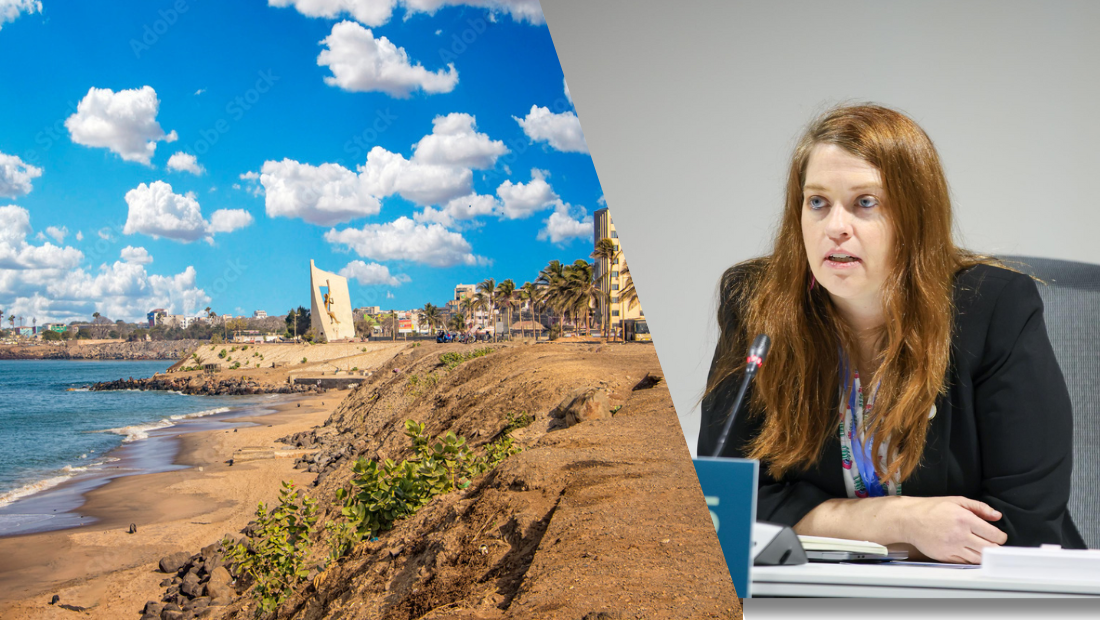
Upcoming preparatory meeting in Dakar offers an opportunity to shape the Conference. AGWA's Ingrid Timboe, will be facilitating and joining several formal discussions.
AGWA will advocate for robust and long term political commitment to water action through the establishment of an intergovernmental process on water.
Three years ago, United Nations Secretary-General António Guterres opened the UN 2023 Water Conference: “This is more than a conference on water. It is a conference on today’s world seen from the perspective of its most important resource." His sense of magnitude and urgency ran through the entire Conference.
This December the world will, once again, unite for water action as the next iteration of the Conference takes place—this time in the UAE. AGWA will be taking part in the official preparatory process, bringing over a decade of policy experience to advocate for robust and long term political commitment to water action through the establishment of an intergovernmental process on water.
What is happening in Dakar?
Representatives from governments, UN entities, international and regional organizations, global financial institutions, civil society, youth, Indigenous Peoples, academia and the private sector will meet to discuss the six interactive dialogue themes of the upcoming 2026 UN Water Conference, as well as proposed outcomes of the conference.
Each Interactive Dialogue will be co-chaired by two Member States who will facilitate the Dialogues and shape its direction:
Water for people: the human rights to water and sanitation, including for those in vulnerable situations, for healthy societies and economies;
Water for prosperity: valuing water, water-energy-food nexus, advancing integrated and sustainable water resource management, wastewater and water-use efficiency across sectors, and economic and social development;
Water for planet: climate, biodiversity, desertification, environment, source to sea, resilience, and disaster risk reduction (DRR);
Water for cooperation: transboundary and international water cooperation, including scientific cooperation and inclusive governance;
Water in multilateral processes: SDG 6 (clean water and sanitation), the 2030 Agenda for Sustainable Development and beyond, and global water initiatives; and
Investments for water: financing, technology and innovation, and capacity building.
Sessions and meetings will inform papers for each theme which will be developed into collaborative processes before the Conference at the end of the year, including concrete proposals for technical content and on how to make the dialogues truly ‘interactive.’ AGWA is part of the UN-Water drafting group for the ‘water for planet’ dialogue, and Ingrid Timboe is participating as a panelist in that roundtable discussion.
The day before the high-level preparatory meeting, on 25 January 2026, a one-day stakeholder meeting on Enhancing Action through Collaboration, convened by the UN Department for Economic and Social Affairs (UN DESA), will provide an inclusive platform for stakeholders to contribute to the Dakar process. Ingrid will be facilitating the stakeholder process for Interactive Dialogue 5: water in multilateral processes. ID5 is perhaps the most expansive of the 6 thematic dialogues, and has the most future-forward mandate: how can we set ourselves up for success in the post-2030 period? Given profound and irreversible changes to our water systems, how can we better protect and manage the fragile resources that remain? Our current governance systems are not designed for this new reality and we cannot wait any longer to start planning what comes next.
Next week’s meeting in Dakar follows on from two preparatory sessions in March and June 2025. During the consultations in March 2025, several delegations including the European Union, called for the establishment of an intergovernmental process on water to extend through 2028 (end of the Water Action Decade) and beyond, with regular mandated Conferences. While there was no consensus on this, it is a promising indication of the growing prioritisation of water on the global agenda and the growing demand for action from Member States and the UN system.
A key outcome AGWA hopes to see at the 2026 UN Water Conference in December is a negotiated resolution on water, having seen what UN resolutions have been able to do for other issues. Without a clear, long-term vision for systemic water resilience, reform of multilateral water governance risks remaining fragmented, disconnected, and constrained by short political cycles. A forward-looking pathway will strengthen the legitimacy and effectiveness of multilateral water governance by guiding UN system reform, enhancing democratic representation, and rebuilding trust among UN Member States, stakeholders, and other actors. By bringing tools and concrete inputs on how to build systemic water resilience, AGWA will support this process every step of the way from New York to Dakar to the UAE.
If you want to get involved with our policy work with UN-Water and the UN’s water conferences, you can join our informal working group on the 2026 UN Water Conference, which meets every other month to share information and prepare joint inputs to the conference process.
For more general policy-related information, join our Policy Group and hear updates directly from our experts throughout the year as we bring water to the forefront of global climate policy.