How the Water Resilience Tracker Is Turning National Ambition Into Local Action
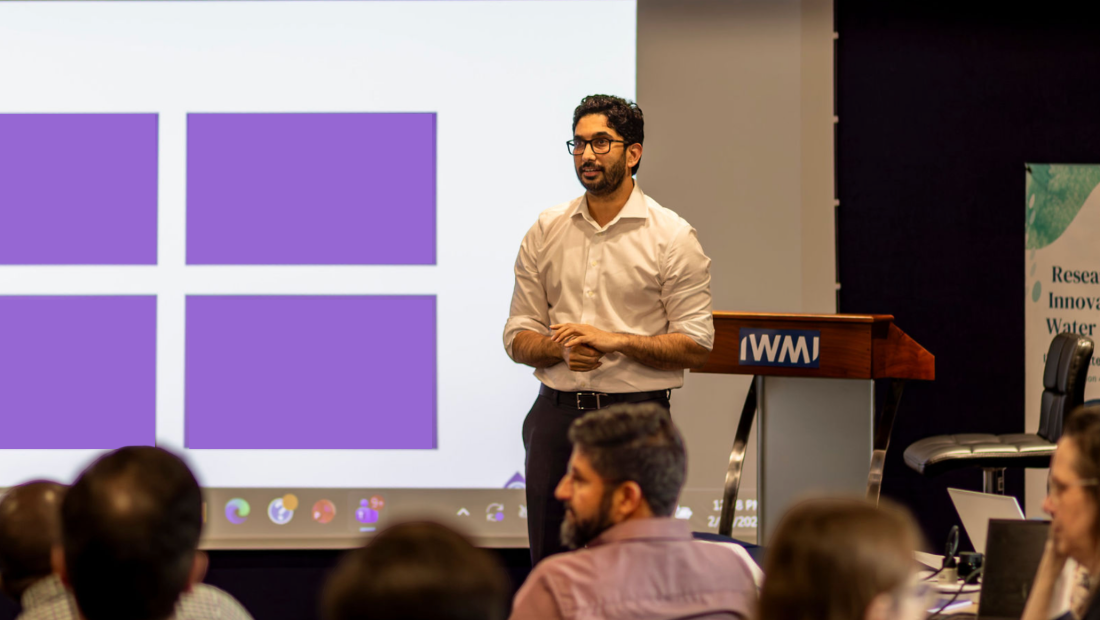
Idrees Malyar addressing colleagues during a workshop, Sri Lanka, 2026
Since 2021 the Water Resilience Tracker team has worked tirelessly to help countries plan for tomorrow’s climate. This World Water Day we highlight the impactful and ever increasing work the Water Resilience Tracker Team is doing with countries and communities around the world, and spoke to Idrees Malyar, the programme’s Director about what’s next.
In 2021 AGWA launched a new tool called the Water Resilience Tracker for National Climate Planning, with support from Foreign, Commonwealth, and Development Office (FCDO) of the UK government. The initial effort was supported by dozens of countries within the Adaptation Action Coalition, and partners at Sanitation and Water for All (SWA), the Global Water Partnership (GWP), and UNICEF.
In the years that followed AGWA and partners led development of – and piloted – the framework through an iterative process with several countries including Egypt, Costa Rica, Malawi, Nepal, Morocco, Palestine, Panama, Tanzania, Colombia and Brazil.
At COP28, against the backdrop of the first Global Stocktake, which showed just how short countries were falling on their NDCs, funding for the UK Government’s Just Transitions for Water Security (JTWS) programme was announced. This was a welcome and promising commitment to the sustainable management of water in an ever changing climate. The Water Resilience Tracker (WRT) is one of three JTWS programmes, and is delivered by AGWA in partnership with Deltares, IWMI and ARUP.
Kelsey Harpham, Director of the Water Resilience Tracker at the time, emphasised the WRT’s core ambition: “We want to reframe water not as a threat to progress, but as a way to reimagine what development looks like. Water is an instrument to facilitate equity and inclusion, prosperity, environmental sustainability, sectoral coherence and climate resilience.”
The past two years have seen this ambition resonate with governments around the world: work is accelerating in existing countries with over 40 countries on a waitlist to join the WRT programmes. After an incredibly busy 2025, this month sees twelve key events taking place across programmes in five core countries: Egypt, Morocco, Malawi, Nepal, and Brazil.
The primary focus of these events is to ensure country ownership and practical application of WRT findings.
Egypt is hosting an in-person national workshop focused on Monitoring, Evaluation, and Learning (MEL) and indicators aligning WRT application with the Government's launch of revised Climate and Water Management Plans at the governorate level.
While in Morocco a dedicated validation workshop is being convened to confirm the results generated from the initial WRT questionnaire-based analysis and plot next steps. A formal Phase 1 stakeholder validation workshop is taking place in Nepal at the request of the Government while a national climate finance workshop is scheduled for late March.
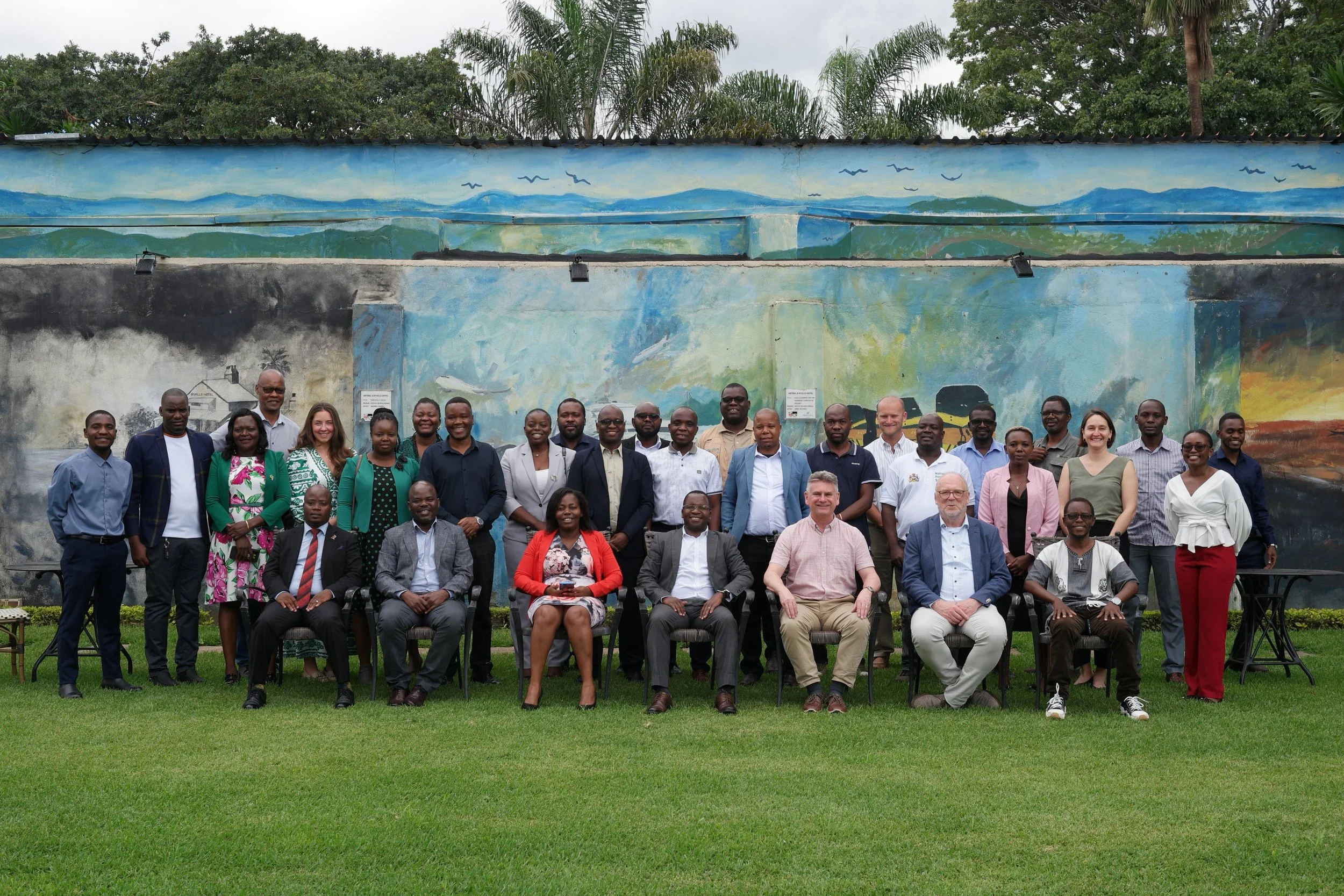
Water Resilience Tracker team and workshop participants, Malawi, 2026
This week a basin-level workshop was held in Malawi’s Shire Valley: it went beyond applying the WRT methodology with local stakeholders, using workshop insights to initiate and co-create a pipeline for bankable projects. Brazil, an early partner of the Water Resilience Tracker, will host two major workshops: one of which with representatives of six River Basin Committees – their participation is crucial to ensuring and advancing basin-level action and investment.
Beyond country-specific work, the WRT is also championing global learning and the integration of critical cross-cutting themes. Following a report recently published on to translate Gender Equality, Disability, and Social Inclusion (GEDSI) principle into project planning the WRT will run a virtual peer-to-peer learning workshop – bringing together partners, country stakeholders, and donors – to strengthen inclusion across WRT processes.
The WRT team will also participate in person and virtually in the upcoming UN-Water Members and Partners Meeting as well as contributing to the preparatory processes for the UN 2026 Water Conference taking place later this year.
We spoke to Idrees Malyar, Director of the Water Resilience Tracker in the middle of this intense delivery period for the WRT about how the WRT is helping communities, the challenges they face and what’s next.
What is a specific country or region where your programme has made a measurable difference — and what does that success look like on the ground for the communities and ecosystems involved?
Brazil is a strong example of the measurable difference the Water Resilience Tracker can make. Phase one saw WRT review eight national policies, shaping a joint action plan to integrate water into Brazil's climate agenda. Two concrete results stand out: Brazil’s five-year national climate commitment now includes a new section on climate adaptation with water at its center, and Brazil’s first National Adaptation Plan includes a dedicated chapter that recognizes water as a cross-cutting issue rather than a standalone sector.
What makes this especially important is that the work did not stop at national policy. Brazil has already decided to take WRT into the next phase of implementation across 16 sectoral adaptation plans and work in six priority river basins. This next phase supports climate-resilient river basin management plans.
On the ground, that success looks very practical: river basin authorities, ministries, and local actors are beginning to use a shared resilience lens to plan for droughts, floods, water allocation, and ecosystem pressures in a more coordinated way. In a country facing everything from drought and deforestation to catastrophic floods, that shift matters for farming communities, urban water security, and the health of river systems alike.
This also reflects a wider lesson from our recent publication, Scaling Water and Climate Resilience: Tools to Link National Strategies to Local Realities: national ambition only becomes meaningful when it is connected to local realities, local institutions, and local action.
The WRT has achieved high buy-in from participating countries. What do you think explains that? Is it the model, the relationships, the incentives, the timing or something else entirely?
I think the buy-in comes from a combination of model, timing, and trust, but if I had to choose one, I would say it is because the WRT is genuinely country-owned and practically useful. The process is not designed as an external assessment that tells governments what they should do. It starts with a questionnaire and guidance process that helps countries systematically examine how water is reflected across climate plans, institutions, sectors, and financing, while actively engaging stakeholders throughout the entire process. Because water cuts across agriculture, energy, environment, planning, infrastructure, and finance, no single ministry can answer those questions alone.
In practice, that makes WRT a useful mechanism for bringing different parts of government into one conversation and helping them work across silos around a shared agenda. That is built into the WRT approach itself: country ownership is at the core, and the process is designed to explore synergies and trade-offs across multiple water-using sectors while responding to national priorities.
The second reason is that countries are engaging with WRT at the right moment and for the right reasons. In 2025, the programme worked closely with national water and environment authorities while they were updating climate-related plans and policies, including Malawi’s NAP, Nepal’s NDC 3.0 and NDC 3.0 Implementation Plan, and Brazil’s climate adaptation architecture. That means governments are not using WRT as a standalone exercise, they are using it when decisions actually need to be made. And because the process does not end with diagnosis, but also offers workshops, training, and technical support on issues such as the basin management, climate finance and implementation, countries see value beyond the assessment itself. I think that is why the buy-in has been so strong. WRT helps governments do something they already know they need to do, connect water to climate planning in a more coordinated, credible, and actionable way. The scale of that interest is also telling, WRT has now registered interest from more than 40 countries.
In short, the buy-in is not about one factor alone, it comes from the fact that WRT is timely, country-led, cross-sectoral, and immediately useful to governments trying to turn climate ambition into something implementable.
Looking ahead, where do you see the biggest opportunity — or the most urgent gap — that this programme needs to move into next?
I see the biggest opportunity as helping countries move from diagnosis to implementation, especially sub-nationally in basins, cities, and infrastructure systems. The next phase of the Water Resilience Tracker (WRT) needs to deepen sub-national application and implementation support, connecting national commitments to local realities.
Climate finance is one of the most urgent gaps identified by countries, and one where WRT can add enormous value. We have already started responding to that through climate finance training in Nepal and a planned programme in Malawi to help mobilize finance for priority water projects. The publication also highlights how finance often does not flow effectively to the local level, with cities and local authorities finding it especially difficult to access climate funds.
If WRT can help countries not only identify policy and implementation gaps, but also translate water resilience priorities into stronger investment cases, finance-ready pipelines, and clearer pathways to public and private finance, that would be truly transformative.
Another major opportunity, and urgent gap is how we engage with AI. We should use AI where it can make implementation more efficient. Brazil’s experience has already shown that it can help apply WRT tools more quickly across complex policy contexts. But AI is also creating a new water governance challenge, particularly through the growing water and energy demands of data centres. For me, that means WRT’s next frontier is twofold, using AI to strengthen implementation, while also helping countries understand and plan for the water implications of the digital infrastructure behind it.
The Water Resilience Tracker has received support from UK Aid through the Foreign, Commonwealth, and Development Office of the UK Government, the Netherlands Ministry of Infrastructure and Water Management, the Inter-American Development Bank, The Deutsche Gesellschaft für Internationale Zusammenarbeit (GIZ), and UNDP.