Water Resilience Indicators for National Implementation
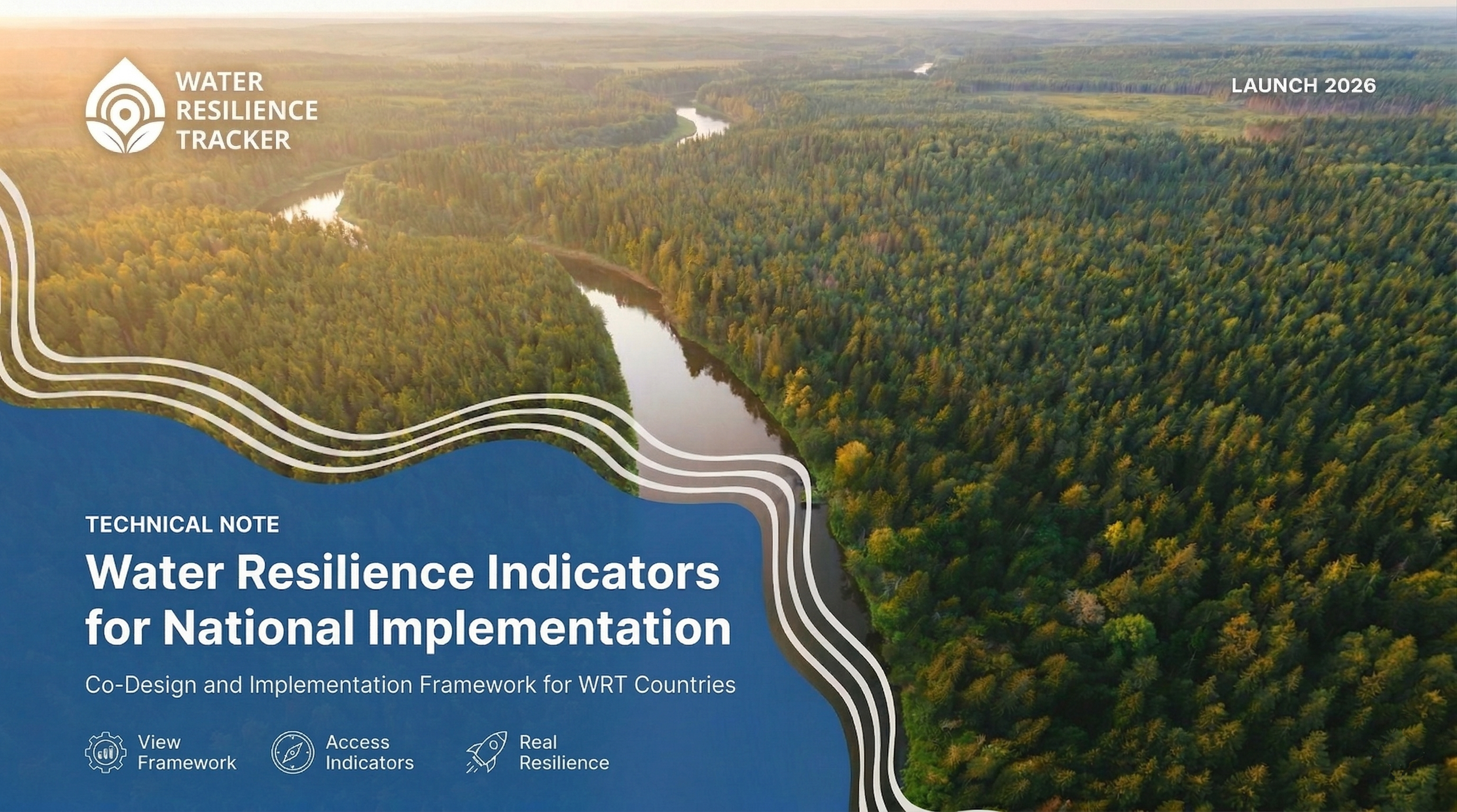
Co-designed by Google Gemini
Most countries are not short of water indicators. They are short of interpretation on how resilient their water systems are. National agencies already carry the weight of SDG, Sendai, NAP, and climate reporting, and adding another parallel framework to that burden is not the answer. Today, AGWA releases a new Technical Note: Water Resilience Indicators for National Implementation, developed with WRT partners Arup, Deltares, and IWMI under the Just Transitions for Water Security programme. Built around the principle that resilience signals already exist within national data streams, the note provides a structured co-design guide for turning them into something decision-useful. As the Global Goal on Adaptation water theme indicators continue to take shape under the UNFCCC, the note anticipates how they can be interpreted and paired to produce a genuine national resilience narrative, rather than treated as a new monitoring effort. Key tools include the Systemic Resilience Indicator Card, which anchors each indicator to a named decision window, a data steward, and a two-sentence narrative connecting signal to action; the REAL rubric, which ensures monitoring captures whose risks and recoveries are actually being measured; and the Resilience Snapshot, a concise policy-facing product that converts evidence into time-bound decisions for named owners. Country experiences from Brazil, Egypt, Malawi, and Nepal show that the binding constraints are rarely data volume, but coordination, interpretation, and accountability.
Download the technical note here.