
AI and Water Resilience
As artificial intelligence scales exponentially, its increasingly visible and painfully localized strain on freshwater resources poses an unprecedented challenge to climate-resilient water management.
Data centers require millions of gallons of water daily: for cooling and even more so for power. What makes this urgent is where and when this happens. Data infrastructure is frequently clustered in regions already facing severe water stress, utilizing local potable water networks during peak summer heatwaves. AGWA has been working on several projects around the world over the past 18 months that have looked to 1) effectively map the various water demands 2) identify levers for resilience like water governance and energy policy 3) outline who needs to be at which table to ensure resilient planning.
To even stand a chance of resilience in a rapidly changing climate, we must move beyond standard corporate "water replenishment" metrics and mandate true, basin-level water resilience and climate-adaptation planning for all future tech infrastructure.
Why do data centers need water?
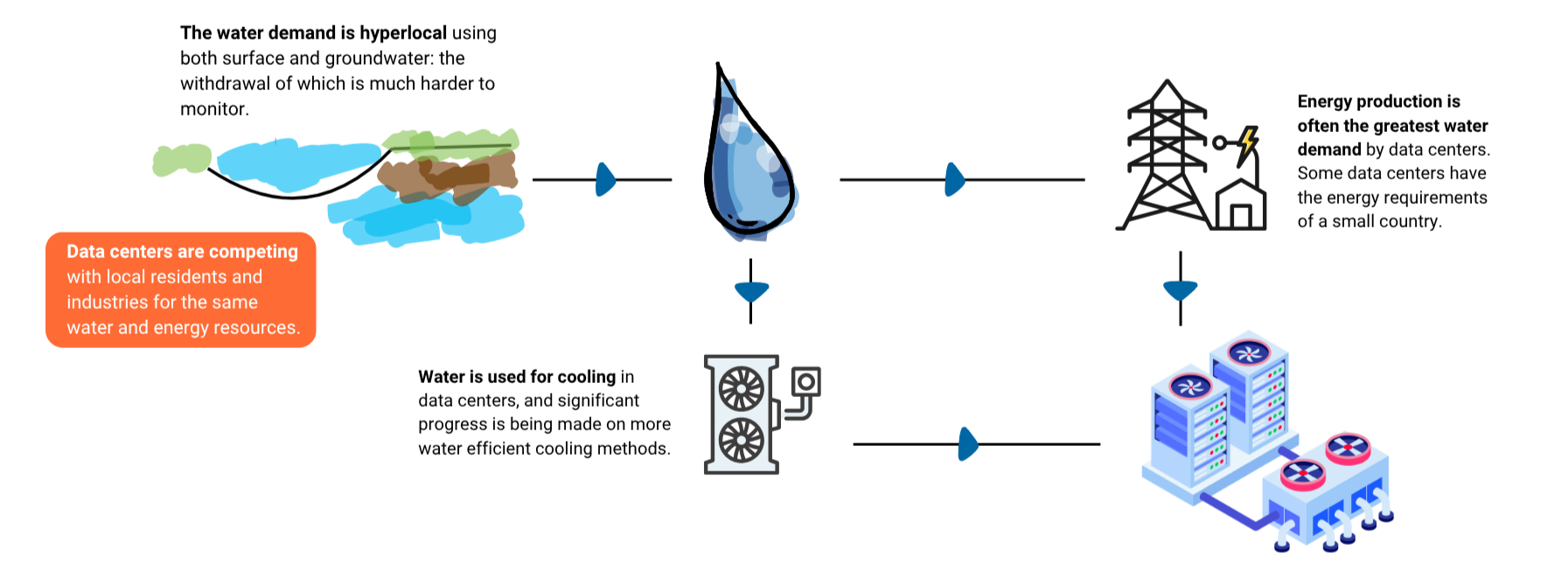
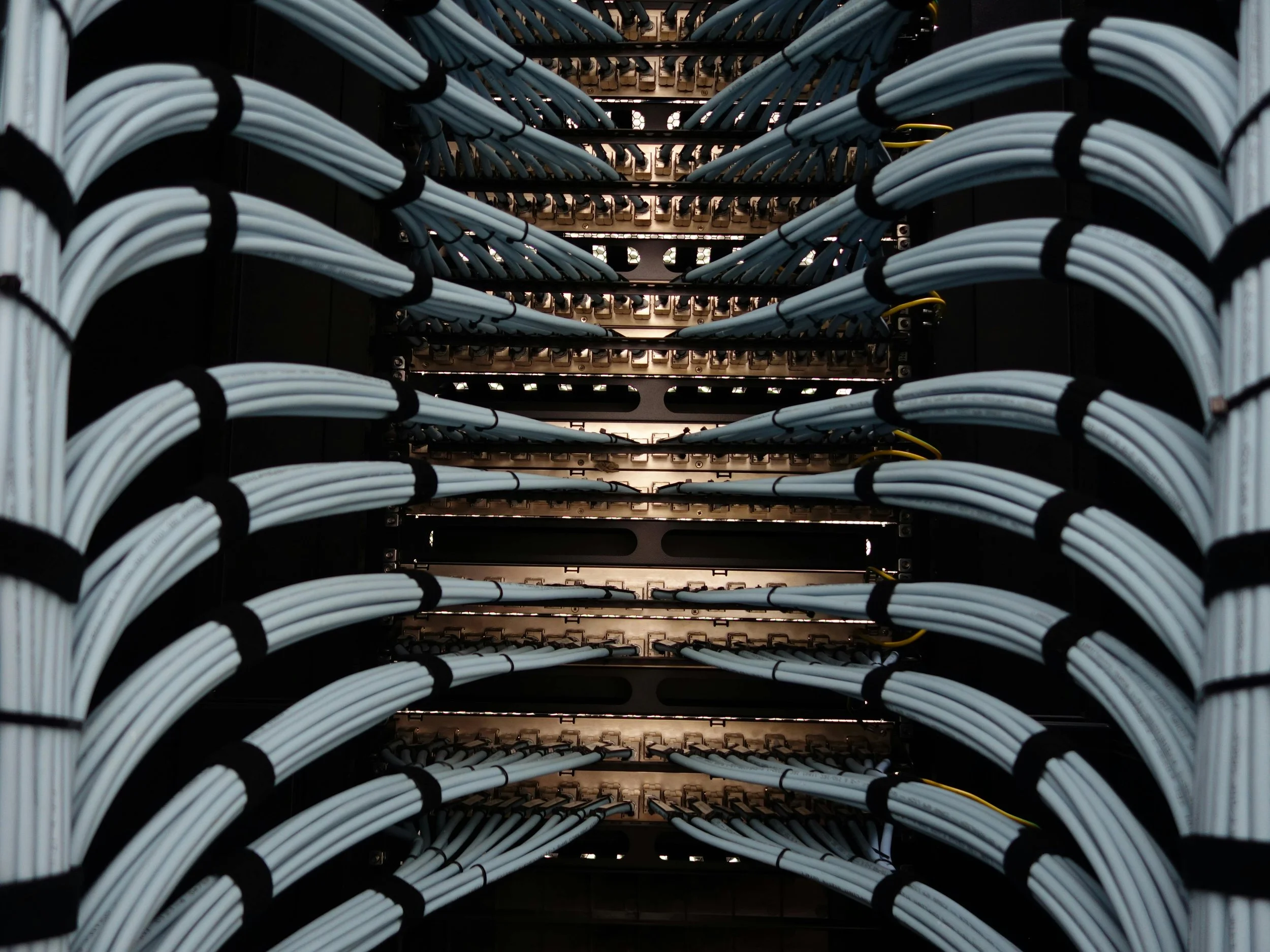
Water and energy are used at various scales and stages of data center operations. Understanding how and where the demand comes is crucial to ensuring that taps don’t run dry. Water is used directly for cooling and indirectly in the generation of the electricity data centers use — particularly if it depends on thermoelectric power plants commonly used for nuclear, coal, natural gas or for hydropower.
How much water does a data center use?
Data centers need water. But there are conflicting narratives on exactly how much water is needed, and what the appropriate levels of concern and responses to that demand should be. Most local energy production also needs water, for cooling.
A lot of focus is placed on the calculation behind the water footprint of single AI search, information presented to inform the public of the unseen resource requirements of their behaviour beyond the keyboard.
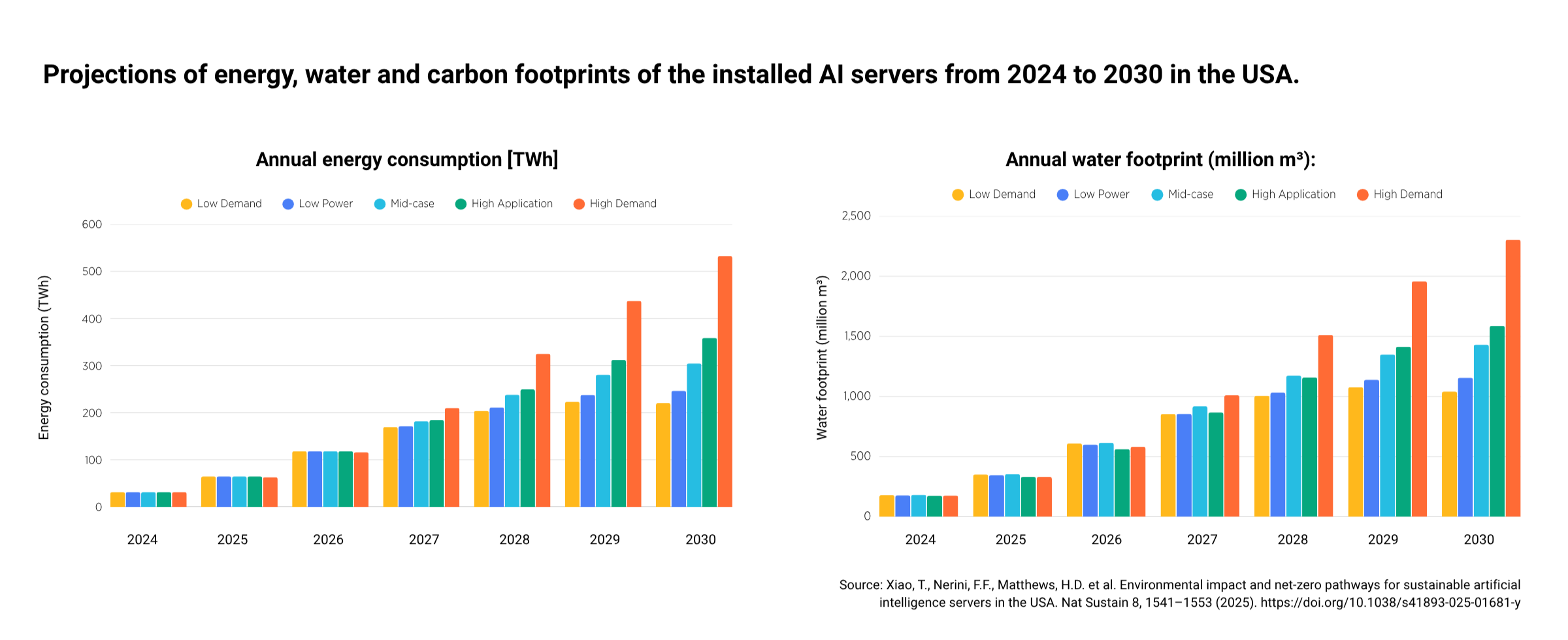
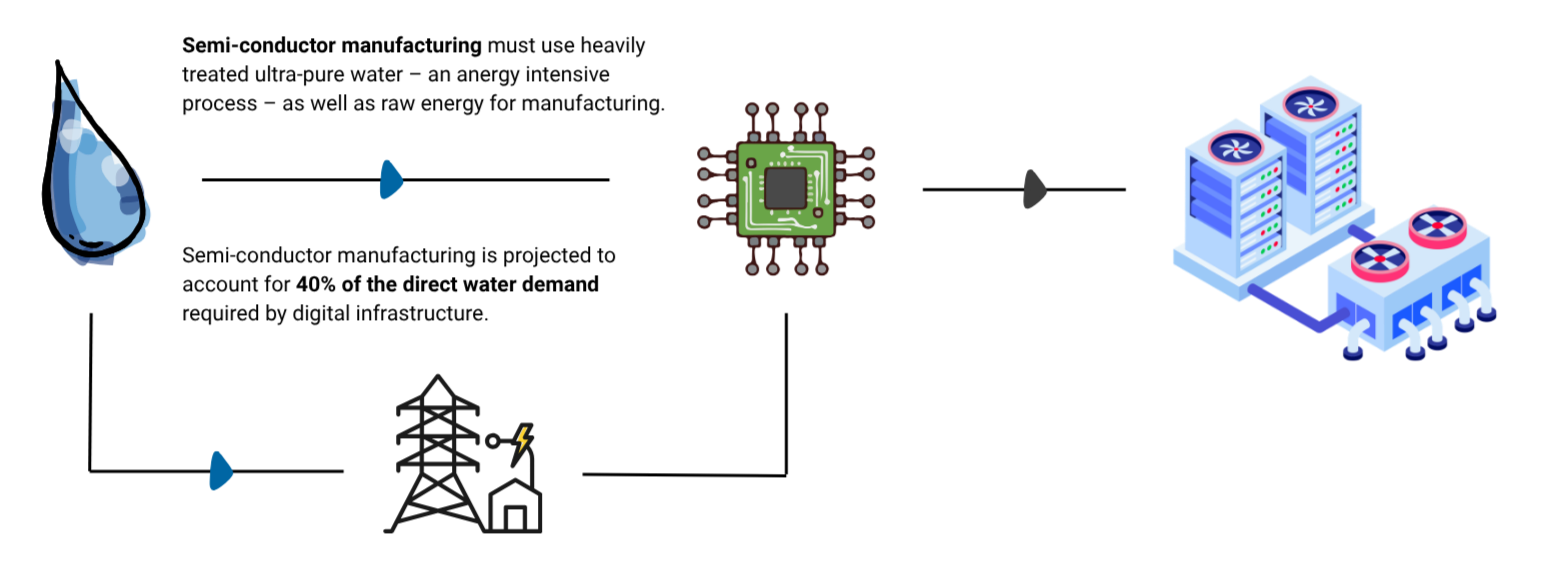
While the methodology to arrive at an exact liters per search metric is debated, the argument misses the central point: data centers are large local water users where they are located, as are the facilities needed to produce the semi-conductors and hardware.
The availability of technology solutions – to reduce water use, increase reuse or use alternative water sources for cooling – is a critical point that can enable sustainable, water-resilient development of data centers. That potential must be translated into investment and operations to enable water resilience. It requires commitment, capacity and capital to come together from a wide set of stakeholders, from data center developers to national and municipal governments, local utilities, shareholders and investors.
If taps run dry, so does business
A best case scenario sees proactive investment in sustainable water management, ensuring that tech companies eliminate regulatory and operational risks, transforming potential liabilities into secure, water and climate-resilient assets. Concurrently, municipalities benefit from tech-driven infrastructure upgrades, recycled water networks, and robust resource planning that protects public health and drives local economic growth. This scenario depends on the existence of regulation and a developed understand of water demand far beyond the data centers’ walls.
How do data centers impact local communities?
While initial infrastructure construction brings jobs, once built they primarily contribute as a consumer and customer – by paying for energy, water and land resources used to public authorities or private vendors and by paying taxes. Additional investment in a data center once built is focused on apparatus like semiconductor chips, built thousands of miles away. From a local perspective, benefiting from a data center requires – existing – sufficient capacity to sell electricity and water services to keep the centers running without compromising the local environment or affordability of services for residents and other users. Otherwise the presence of a data center risks having a wholly negative impact on its local environment.
How AGWA works with Water, AI and Data Centers
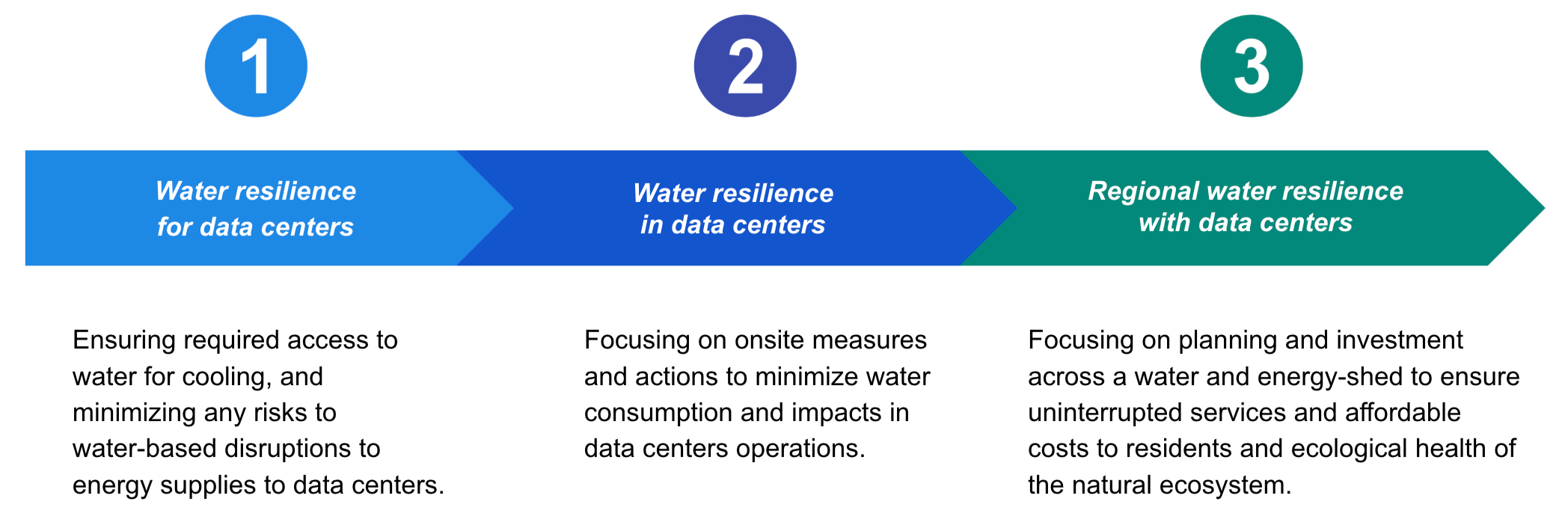
AGWA recognises the rapid growth of digital infrastructure as an already occurring economic shift that demands a deep resilience mindset. Rather than treating a facility as an isolated island, data centers and their development must be embedded into the surrounding watershed system. AGWA can leverage its deep technical expertise and frameworks like Climate Risk Informed Decision Analysis (CRIDA) and the Water Resilience Assessment Framework (WRAF) to stress-test regional water, energy, and supply-chain dependencies against increasingly frequent climate shocks.
AGWA advocates for a future where tech planning shifts from simple corporate water-replenishment metrics to basin-wide coordination: bringing developers, utilities, local communities, and municipal planners to the same table.
In 2026, AGWA convened global experts to address this exact intersection of digital growth and watershed health, exploring how tech leaders, power utilities, and policymakers can move beyond fence-line metrics toward integrated, basin-scale planning that builds true resilience for people and planet.
Resilient Waters Project with Australian Water Partnership
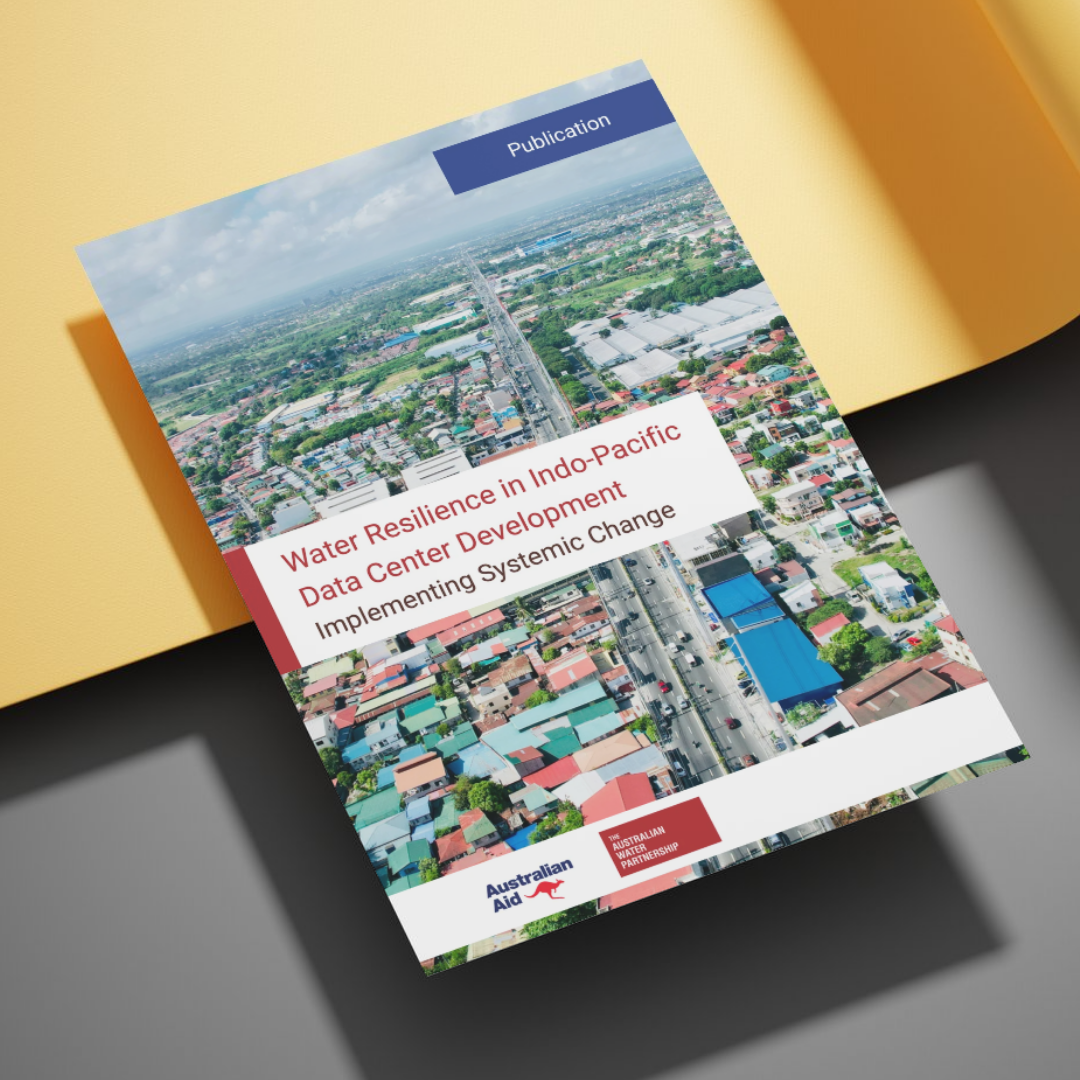
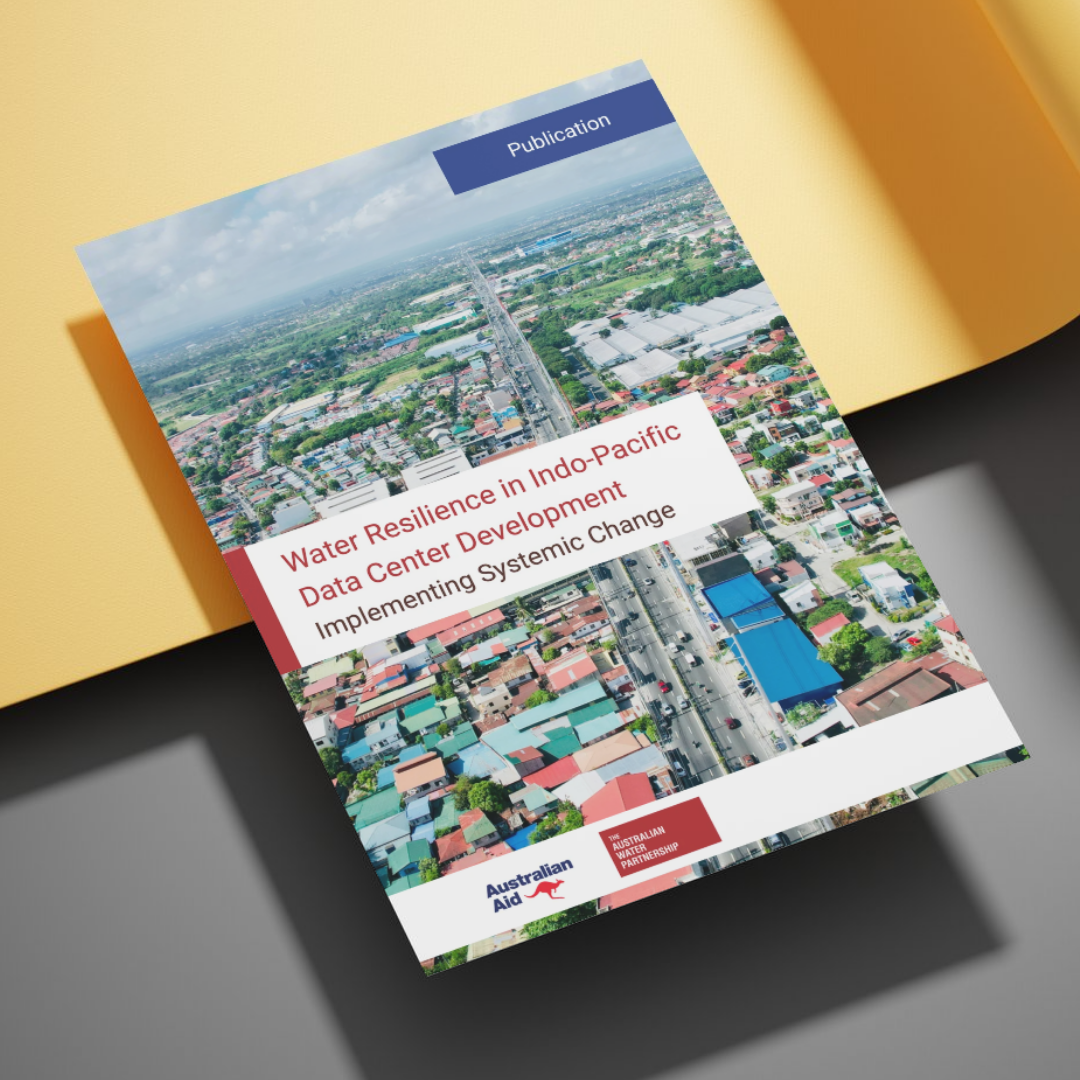
Data center capacity in the Indo-Pacific region is predicted to double within the next three years. A project launched in 2025 between the Australian Water Partnership (AWP) and the Alliance for Global Water Adaptation (AGWA) seeks to equip those cities and regions with the policy frameworks, knowledge, and tools they need to not just survive an AI boom but thrive in it.
As part of this project several closed workshops were held with a range of stakeholders in the region which informed the development of three articles and a policy brief.


Project with US Department of Energy and Pacific Northwest National Laboratory
In 2025 AGWA led a landscape assessment of key stakeholders that have a direct impact on energy and water security in the United States for the Pacific Northwest National Laboratory’s (PNNL) Integrated Water-Power Resilience Project (IWPRP), sponsored by the Department of Energy’s Water Power Technologies Office’s (DOE WPTO).
The project was in support of DOE’s new Energy-Water Resilience (EWR) Program. Our research identified areas for engagement between actors across government, private sector, utilities and civil society that could support strategic actions to enhance energy-water resilience across the United States. One of the thematic areas of emphasis within the analysis was on data center and energy demand growth. Our activities and final outputs were intended to provide guidance to DOE’s EWR Program on opportunities around new partnership networks in energy-water-data and improved dissemination of operational guidance across end-user groups.
Want to work together on water, AI and data centers? Get in touch >