How to go to Bonn
This year AGWA’s Ingrid Timboe is heading back to Bonn, Germany for the UNFCCC’s annual June climate meetings. This meeting marks the mid-point between climate COPs when delegates re-convene to advance work mandated by the previous conference and attempt to progress agenda items that were stalled or deferred. The official name for this gathering is the “sessions of the Subsidiary Body for Scientific and Technological Advice and the Subsidiary Body for Implementation of the United Nations Framework Convention on Climate Change”, but most people just call it the SB. Among non-government attendees, participation at the SB is generally limited to the climate policy specialists (like Ingrid!) who follow specific agenda items or workstreams. So we asked Ingrid – self-proclaimed climate nerd – to share some tips for understanding and engaging at Bonn, a critical milestone ahead of COP31.
What Makes Bonn Different
Every June, a few thousand climate negotiators, technical experts, and civil society representatives converge on the UN Campus in Bonn for the intersessions. The whole conference takes place on the UNFCCC's Bonn Campus situated along the leafy banks of the Rhine River. If COP errs toward climate diplomacy as spectacle, the intersessions are climate diplomacy as craft. Smaller rooms, wonkier conversations, less theater, more text. Negotiators form positions here, draft language line by line, and build the relationships that determine whether COP negotiations produce meaningful outcomes or just more documents.
The Bonn intersessions bring together two bodies: the Subsidiary Body for Implementation (SBI) and the Subsidiary Body for Scientific and Technological Advice (SBSTA). SBI looks at how countries implement their commitments: national adaptation plans, transparency frameworks, capacity building, finance flows. SBSTA sits at the interface between science and policy: technology transfer, research, methodological questions. If you want to understand COP processes, a key element lies in what negotiators resolved, or failed to resolve, at the subsidiary bodies.
Among non-government attendees, participation at the SB is generally limited to the real climate policy nerds who follow specific agenda items or workstreams, such as the Just Transitions Dialogue or the Local Communities and Indigenous Peoples Platform. There are official side events, but no blue or green zones and no cavernous exhibition hall. The SB draws climate activists, but these protests are much smaller and tend to orient toward specific campaigns. Historically, this has lowered the temperature, allowing for more dialogue, spontaneous bilaterals, and compromise ahead of COP negotiations.
The 2026 session lands between two landmark moments: COP30 has just concluded in Belém, and COP31 is coming to Türkiye. It also arrives as the UN Water Conference puts water at the top of the multilateral agenda, and in the shadow of a genuinely unprecedented governance arrangement. Last year, both Australia and Türkiye bid to host COP31. Since neither party conceded, they agreed to a shared Presidency arrangement approved during COP30. Türkiye will host COP31 in Antalya, with high-level pre-COP meetings in Fiji and Tuvalu. Australia's Minister Chris Bowen will serve as Head of Negotiations; Turkish Minister Murat Kurum will serve as COP31 President. SB64 will give delegations from both countries space to continue delineating responsibilities and meet with other Parties on COP31 preparations.
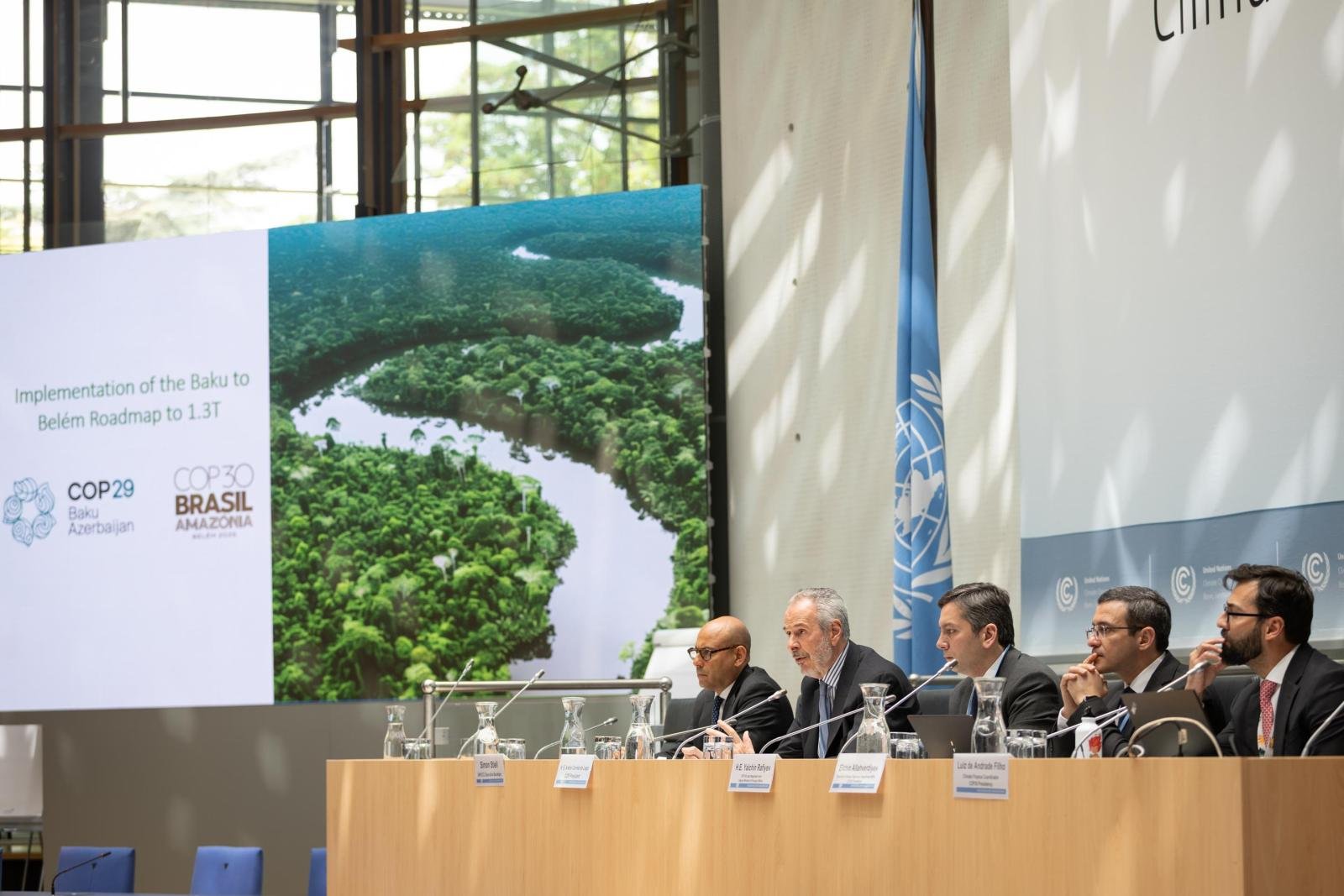
Photo by IISD/ENB - Kiara Worth, 2026
Who Goes to Bonn
Bonn draws technical negotiators: people who write the texts, NDC and NAP leads, UNFCCC Secretariat staff, representatives from select multilaterals, and a small number of NGOs with genuine access and established relationships. Ministers and heads of state stay home. The signal-to-noise ratio is dramatically better.
At COP, proximity to decision-makers depends on credentials, pavilions, and the physics of 30,000 people in a conference center. At Bonn, the people who draft language are in smaller rooms, corridor conversations happen naturally, and what matters is knowing who you are looking for and what you want to say. Side events are fewer, more substantive, and more directly connected to what is happening in the negotiating rooms. They are genuinely useful places to test framing and language you want to see in the COP31 agenda.
What's Actually Being Decided
Parties will bring the unfinished business of COP30 to Bonn. After another fierce round of negotiations at COP30 last November, delegates will arrive still feeling bruised by how things got pushed through at the last minute in Belém. While Parties ultimately reached "consensus" on a wide-ranging package, many items were left unfinished or rushed through with confusing or conflicting mandates.
The Global Goal on Adaptation is perhaps the clearest example. COP30 produced the Belém indicator package, but that package generated at least as many questions as it answered. Two competing workstreams now run in parallel: the Baku Adaptation Roadmap and the Belém-Addis vision. We now have, as one observer noted, "two distinct but overlapping processes for advancing action on the Global Goal on Adaptation." A workshop on the Baku Roadmap will take place at SB64, but with no agreed guiding questions, no stated goals, and no further elaboration from COP30 beyond a bare mandate for six workshops. The role of technical experts and non-state actors is genuinely unresolved. These are not minor procedural details. They will shape what adaptation governance actually delivers.
Climate finance remains similarly undecided. Operationalizing the landmark $1.3 trillion climate finance goal agreed in Belém is a job that starts at SB64. National Adaptation Plans arrived at COP30 with expectations of more definitive decisions and left with deferrals. The Global Stocktake follow-up is also on the table. Translating stocktake signals into concrete implementation guidance has proven difficult, and the outcome will shape how ambitiously countries approach NDC revision cycles going forward.
Other topics have moved outside the COP process entirely. After failing to reach consensus on fossil fuel transition language at COP30, a subset of Parties decided to hold independent, voluntary meetings to move forward. The first international fossil fuels meeting was held last month in Colombia. Just last week, 141 countries supported a new UN General Assembly resolution endorsing a landmark International Court of Justice ruling affirming that all governments carry a legal obligation to combat the climate crisis. It will be interesting to see how delegates try to reconcile decisions taken outside the Convention with the fossil fuels transition roadmap identified at COP30.
Why 2026 Bonn Is Especially Critical
Parties arrive at COP with mandates already fixed. Bonn is the last real point of influence before that happens. Text agreed at Bonn is far harder to reopen at COP, and re-opening agreed language in a room of 190-plus parties rarely goes well. If you want to shape what COP31 decides, the work starts here.
2026 is also what some are calling a triple COP year: UNCCD and CBD are both holding their Conferences of Parties alongside the UNFCCC process. This compounds pressure on delegations already stretched thin, but also creates opportunities for cross-convention coherence on land, water, and biodiversity that other years do not offer.
The geopolitical backdrop is not helping. The breakdown of negotiations in the UNFCCC reflects the larger, ongoing rupture in multilateral cooperation. Countries ready and willing to do the hard work of implementation are fed up with the efforts of a few powerful countries intent on slowing or reversing global progress. The shared presidency introduces genuine uncertainty about where authority sits. How that resolves at SB64 will say a great deal about the shape of COP31.
Where Water Flows
The GGA water targets from COP30 are real but incomplete. The Belém package established indicators, but questions about implementation, financing, and the relationship between the competing adaptation workstreams remain wide open. Whether WASH connects to NDC implementation and climate finance eligibility, or stays vague in ways that are difficult to fix later, is a question Bonn can help resolve.
Türkiye's relationship with water is worth understanding. In a water-stressed region with complex transboundary dynamics, water functions as a core national interest, not an abstract climate variable. Australia brings different pressures: managing one of the most water-stressed agricultural economies in the developed world, and the industrial demands of the energy transition. Both presidencies bring water into the conversation substantively. That creates an opening.
The Water for Climate Pavilion community is mobilizing for this window. The goal is not just relationship-building, but specific language in specific documents, connections between the GGA water targets and the finance architecture, and a clear through-line to what the Water Conference needs from the COP31 process. The UN Water Conference follows closely after COP31. Bonn is where you enter that pipeline.
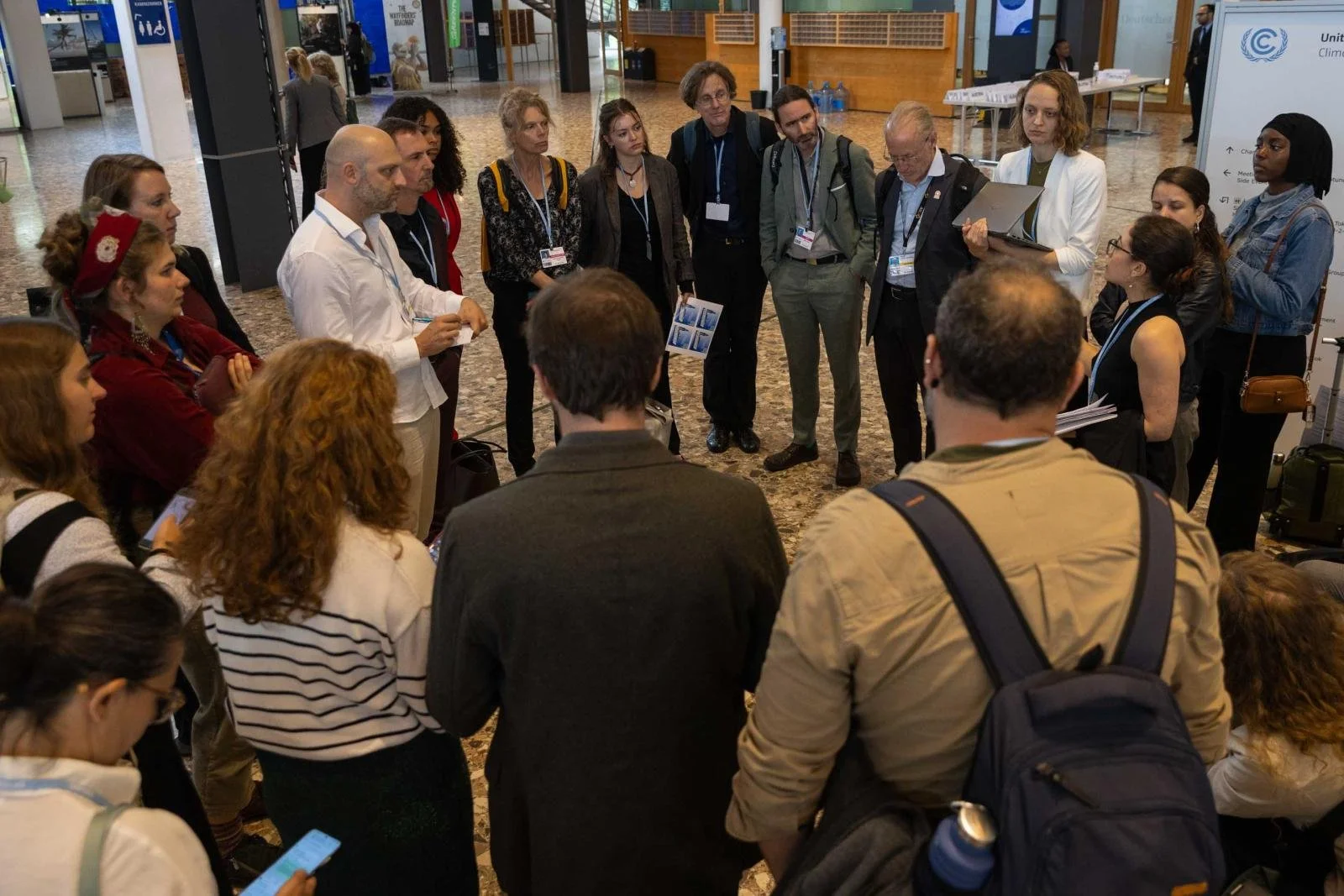
Photo by IISD/ENB - Kiara Worth, 2026
How to Engage
The most important thing to understand about influencing Bonn is that it cannot be done effectively on-site without prior relationships. Working through Party allies, including water-friendly delegations, G77 members, and the COP31 presidency countries, is the primary lever available to civil society. The most effective civil society engagement looks less like advocacy and more like technical support to delegations who share similar goals but lack bandwidth.
Read the provisional agenda carefully, identify the contact groups and informal consultations relevant to your work, and know who leads on those items. The first week tends to be more procedural; the second more substantive as informal consultations intensify and text begins to close. The Earth Negotiations Bulletin, published daily during the session by IISD, is essential reading and a reliable guide to what is happening in rooms you may not be able to enter directly.
The answer to what the SB can accomplish in this moment is not "either/or" but "both/and." Progress will be uneven. But as Ingrid Timboe, AGWA’s Deputy Director – an experienced observer of these negotiations – put it, "we do not need to wait for consensus, nor must we abandon our institutions."
Bonn does not generate the coverage COP does, but it is where the decisions that matter get shaped, before ministers arrive, before mandates lock, before the window closes.
For daily reports on what’s happening in Bonn check out IISD’s Earth Negotiation Bulletin >